


dataTaker Intelligent Data Logger Provides Accurate Data Collection
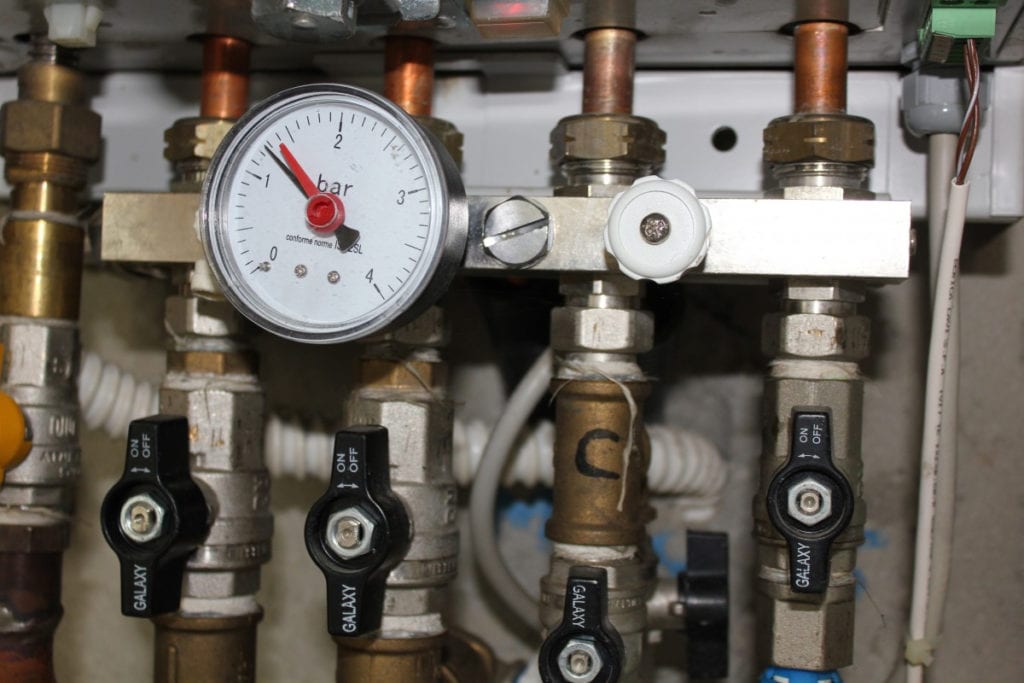 CAS DataLoggers provided a performance verification system for a solar water heating system installed in a nursing home. The solar collectors, installed by a local HVAC contractor, are commonly used to heat residences, pools, and hot tubs and to provide hot water. In this case, the facility’s kitchen was a large user of hot water for cooking and dishwashing. On sunny days, solar collectors mounted on the roof heat water in a closed-loop system to 150°F or more which is then stored in a 1,000-gallon tank. Hot water from the tank is pumped through a plate heat exchanger which then heats up tap water to provide residents and the kitchen with hot water all day. This system saves the nursing home considerable energy costs since the solar collectors provide the bulk of the energy for heating instead of using conventional gas or electric water heaters to take incoming water from 50-60°F to use temperature. The HVAC company wanted a monitoring system to provide data showing how much energy was coming from solar collectors. This helps verify savings for future presentations to governmental and residential customers and for inclusion in their sales literature.
Installation
After the caller described this application, a CAS DataLoggers Applications Specialist provided the company with a dataTaker DT80 Universal Input Data Logger which was installed in a control panel and connected to thermistors connected to the inlet and outlet of the solar collector, cold water supply and hot water outlet of the heat exchanger, storage tank and various other points in the system. The DT80 was also connected to flow sensors attached to the solar collector-storage tank loop, heat exchanger loop, and supply line to the facility and a pyranometer to measure the solar intensity. Lastly, the digital inputs of the logger were used to monitor the state of the pumps as to whether they were on or off.
Usage
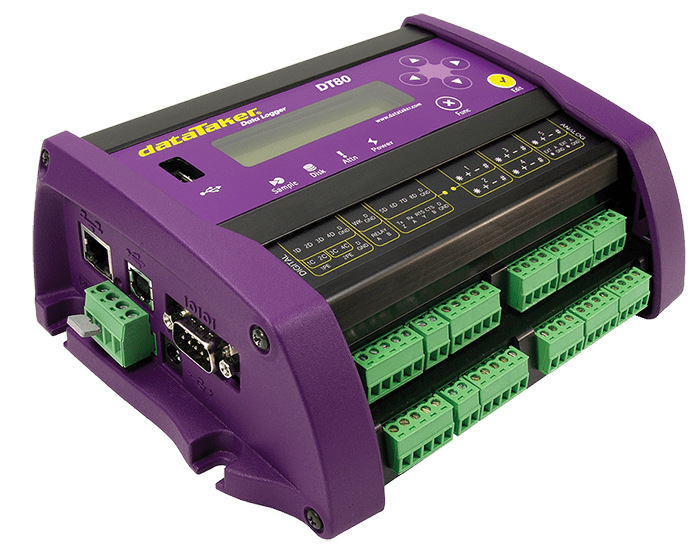 The DT80 is programmed to sample the water temperatures from the thermistors and the pulse signals from the flow sensors once a minute. Using the calculations capability of the logger, it was possible to calculate the amount of energy captured by the solar collectors using the temperature difference between the incoming and outgoing water and the flow rate. Also, alarms were set-up to activate pumps if the temperature in the system got to high on a warm, sunny day. All of the measured data was stored in the loggers 128MB of onboard flash memory allowing months’ worth of local storage. Using the dataTaker’s built-in FTP client, data is automatically uploaded to a server in the HVAC contractor’s office for analysis and long term archiving. This data enables the HVAC company to remotely monitor the system’s water flow rate and the inlet/outlet water temperature. They can calculate how much energy the system is capturing and how much money it is saving the facility every week, month or year.
Benefits
The HVAC provider found that the dataTaker DT80 easily handled all of their monitoring and control requirements. Temperatures were accurately captured from the thermistors, flow rates from flow sensor with 4-20 mA outputs and run times for the different pumps. The DT80 is able to not only record but also calculate the heat gain and the solar collector’s BTUs which the customer can use as a demonstration of cost savings. The HVAC provider is confident that their solar heating system will pay for itself in a few years, and the dataTaker is their way to provide performance verification for the project.
For further information on the dataTaker DT80 Universal Input Data Logger, performance verification systems or to find the ideal solution for your application-specific needs, contact a CAS Data Logger Application Specialist at (800) 956-4437 or request more information.