


Common Issues and Recommended Solutions
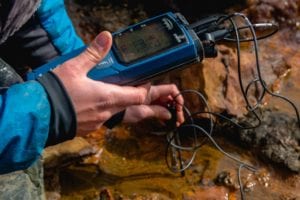 pH Measurement is very common in industrial processes, plating, wastewater treatment, and environmental monitoring. Using a data logger to record pH provides information on long-term trends and the impact of various factors along with providing information for quality control, compliance reporting, and alarming. However, to capture accurate measurements there are 3 important considerations that can directly affect measurement accuracy. We have put together this quick blog post on selecting a data logger to measure pH which includes common problems and recommended solutions.
Basics of pH Measurement
The pH value represents the Hydrogen ion activity of a solution. The pH scale varies from 0 (strongly acidic with a high concentration of H+ ions) to 14 (strongly alkaline with a high concentration of OH− ions). The most common pH measurement method utilizes a special Hydrogen ion selective electrode (pH probe) immersed in the solution along with a second reference electrode. This ion-selective electrode provides a voltage output relative to the reference electrode that varies with the concentration ratio of Hydrogen ions inside the electrode to those outside the electrode. The reference electrode output is independent of the ion ratio. By measuring the voltage between these two electrodes, you can find the pH of the solution. However, the measurement of the pH of a solution is not as simple as it may first appear.
Considerations for Accurate pH Measurements
Using a simple voltage input data logger to record the potential between the two electrodes creates several challenges that must be taken into account to obtain accurate pH measurements.
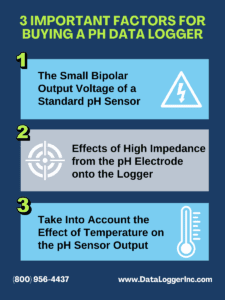
- The voltage range provided by a standard pH sensor is in the range of +400 mV to -400 mV, corresponding to a pH range of 0 to 14 at room temperature. Any data logger intended for pH measurements must be capable of accepting positive and negative voltages. Also, the device must be sensitive enough to be able to accurately measure small changes in voltage. A data logger that provides a full-scale input range of ± 1 to 2 volts will ensure adequate accuracy and resolution to detect changes in pH of 0.1 or less – a logger that is designed for 10 volts full scale may not be able to provide the required accuracy.
2. The pH electrode has a very high impedance—effectively, the pH electrode produces a voltage, but because this voltage develops across an ion-selective glass membrane, the amount of current that the electrode supplies to the measuring circuit are very small. A standard voltage data logger may have an input impedance of 1 Megohm which is fine for typical voltage measurements. However, when taking pH measurements, the amount of current drawn by this resistance causes loading effects which will produce large errors in the measured voltage. It is very important to choose a data logger with a high impedance input amplifier, typically on the order of 1 gigohm or higher such as the Delphin Expert Logger, to allow direct measurement from the pH electrode with negligible current draw. If this is not possible, pH measurements can be made using standard voltage data loggers using an external preamplifier or pH probe with an internal amplifier to provide a buffered output signal and avoid the negative effects of input loading.
 The most common amplifier is a small battery-powered unit that just provides buffering without voltage gain. Because the currents are very small, these amplifiers can run for months on a single battery. Other amplifiers are available that can operate from an external DC power supply to provide continuous operation for extended periods. If the data logger and pH electrode are going to be spaced far apart, it’s best to use an amplifier with a 4-20 mA current output. This allows the signal to be transmitted hundreds of feet with very little loss of accuracy or increase noise.
3. The last consideration when measuring pH is the effect of temperature on the output voltage of the sensor. The error in the output voltage becomes worse as you move away from a pH value of 7 and as the temperature deviates from 25°C. For example, without taking temperature into account, simply measuring the voltage output of a probe immersed in a solution of pH of 2 at a temperature of 85°C can lead to errors as high as .9 pH. In this case, choosing a multi-channel data logger capable of temperature as well as voltage provides the ability to measure and correct for temperature.
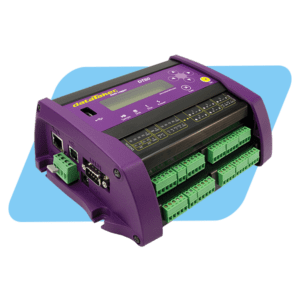
Intelligent, universal input data loggers such as the dataTaker DT80 or Grant Instruments SQ16 can be programmed to measure both the voltage and temperature and then automatically apply the appropriate temperature correction factor to supply an accurate pH value. An alternative, if the data logger can’t measure temperature, is to use a preamplifier as described above that also incorporates an automatic internal temperature compensation circuit. These devices use an external sensor to measure the solution’s temperature and provide the appropriate correction to the buffered output voltage.
Conclusion
Using an intelligent data logger with the appropriate input range and input impedance that also allows a temperature measurement and application of a correction factor allows accurate reliable pH measurements.
For more information on dataTaker and Grant Instruments data loggers, or to find the ideal solution for your application-specific needs, contact a CAS Data Logger Applications Specialist at (800) 956-4437 or request more information.
Leave a Reply
You must be logged in to post a comment.