


6 Key Questions For Selecting The Right Product
We routinely get calls from customers who ask: “Which of your products is best for my oven temperature measurement application?” Whether you are an engineer planning for your next furnace temperature profiling project or a paint shop looking to monitor paint curing as part of quality assurance, the number of available options when choosing your oven temperature data logger can be overwhelming. Considering the wide variety of systems available today, making a call to an experienced solutions provider is the best way to get the information you need to make an informed decision. The majority of these calls get customers started with this simple response: “Sure, what are you looking to accomplish?”
So What Is Thermal Profiling?
Thermal profiling is the measurement of the temperatures throughout the interior of an oven. Essentially, there are two types of oven temperature profiling: through-process profiling and stationary or batch oven profiling.
Through-process profiling relates to tunnel or conveyor ovens, where the product moves through the oven as it is heated, while a batch oven is manually loaded and unloaded, and the product remains stationary throughout the process. A batch oven typically uses a fixed data logger external to the oven with temperature probes that extend inside, while the conveyor-based oven requires a data logger that can move with the product through the oven.
Through-process oven profiling is used to validate that the parts moving through the cure cycle—which may feature multiple temperature zones—are experiencing the time at specified temperatures throughout the process. This requires a high-temperature data logger as well as a protective thermal barrier enclosure to further insulate the electronic logger from the high temperatures.
What Temperature Profiling System is Right for Me?
When deciding on an oven temperature data logger, it helps to first consider not only your immediate but also your future requirements. Here are 6 essential factors you should consider when selecting a logger:
- Input Channels: First and foremost, how many different points do you need to measure within or on the product going through the oven, and how many can you foresee needing down the road? Since data loggers are available in many different configurations and models, knowing what you need now and possibly in the future will have a significant impact on your choice.
- Probe Type: Will you need to measure the air and surface temperatures of your parts? Answering this will dictate the type of probes that are required.
- Sensor Type: What temperature range do you need to work with? Commonly used thermocouple types include J and K, but more exotic types may be required for very high temperature ovens or kilns.
- Thermal Protection: If this is a through-process application, does the logger’s enclosure need a special phase change insert for extended operation at the oven temperature?
- Software Features: How user-friendly is the software? Do you require specialized calculations, such as paint cure percentage? Will you need additional software features, such as data analysis and report printout?
- Regulator Compliance: Do you require compliance with any specific regulations, such as AMS 2750 D?
Generally, an experienced provider will ask specific questions to help you determine which data loggers are the most suitable for your individual application, including how many inputs are required and what type of thermocouple is best; how much data needs to be stored; temperature limits of the enclosure; necessary software features such as analysis and curing calculations; and any other requirements the application might have. This initial exploratory phase is the best time to engage a representative in a question-and-answer session with a quick phone call or online chat.
Example of An Oven Temperature Logger Profiling Kit
As an example of a complete temperature profiling kit, CAS DataLoggers offers Grant Instruments’ latest version of the popular OMK610 data logger with many new features to assist in production quality control and to cut operating costs. The logger’s enhanced thermal barrier gives it maximum protection, available with an optional heat-absorbing insert. The kit meets paint manufacturers’ specified cure parameters by maintaining a specified level of cure, ensuring repeatable quality, maximizing oven usage and throughput, and optimizing oven running (energy) costs. Additionally, the logger archives data and results as part of any quality control system or supplier audit trail, and line operators can use it without the need for a PC.
Equally deserving of consideration is the software your logger uses—most importantly, its ease of use, features, and cost. Grant’s easily programmable PaintView set-up and data analysis software offers % cure calculation, data storage, report generation, and analysis. PaintView also gives users a choice between using a ‘classic’ or ‘universal’ area integration cure analysis method. Users simply set the paint type and pick their cure method to get started logging. Also, unlike many competing software platforms, PaintView has no extra cost per installation.
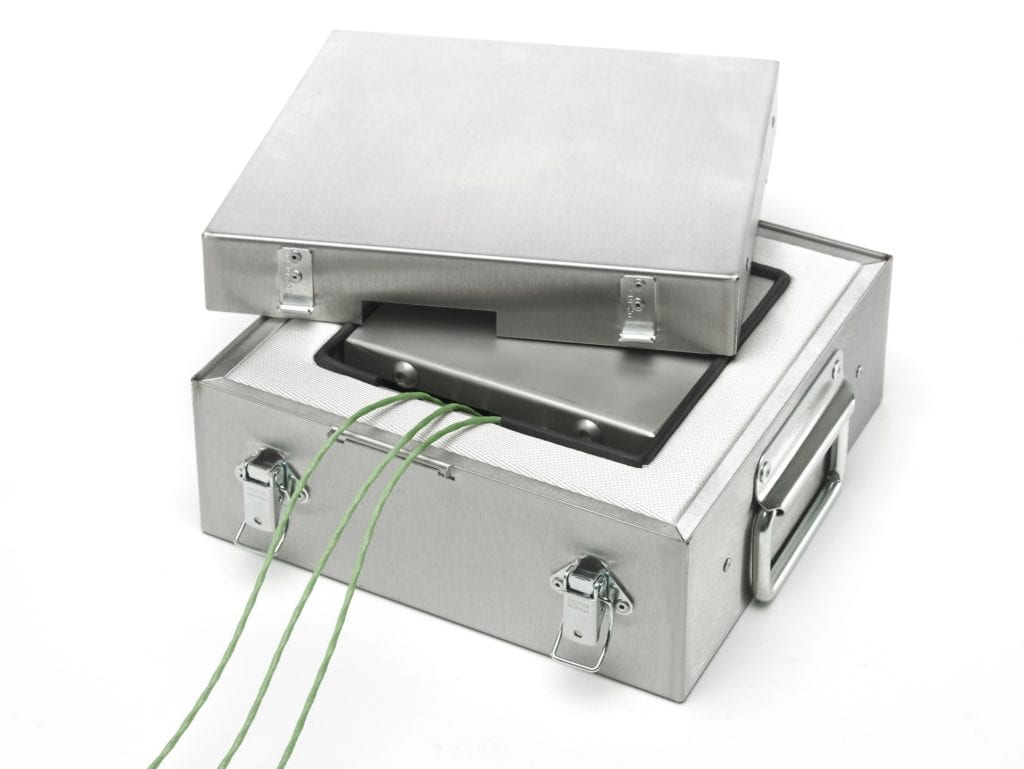 You’ll want to closely examine what’s included with any temperature logging kit you’re considering. Grant’s complete OMK610 logger kit includes:
• The 6-channel OQ610 temperature data logger (for use with Type-K or T thermocouple probes)
• A thermal barrier suitable for paint curing applications
• USB communication cable
• PaintView data storage and analysis software
• A quick start guide
• A set of batteries
• A convenient carrying case
Additionally, a thermal insert sleeve to extend the operating temperature range is also available, as well as your choice of fast response, high accuracy probes with models for air and surface temperature.
Given the amazing range of data logging products on the market, before you make your choice of manufacturer and model, make sure you speak with a trusted solutions provider to find out how to get the most suitable device for your specific application at the most affordable price. A good provider can offer you experienced help over the phone as well as live chat support and a detailed online store listing specifications. Make sure your provider also offers critical value-added services such as customization, configuration, and experienced technical support.
View more information on our Oven Temperature Logger Products.